TemplatesA whole site, from the start.
A template gives a site its first version: its pages, the layout around them, its brand kit, and the bricks it needs. The project starts from it, then lives its own life.
Updated on
On this page4 sections
Four starting templates, or start blank.
The Studio offers them at the "The shape" step, before the first page. Each comes with its pages and the bricks it needs, then Kubbler adapts it to your description.
Landing page
To present a software product: a home page, then pricing, the company and contact.
Blog
An editorial blog: the latest articles on the home page, a reading page, about and contact. Every article has an author: the blog needs accounts.
Appointments
For a practice that works by appointment: online booking on real time slots, the services and contact.
Dashboard
An application: a public home page, then a dashboard for signed-in accounts, settings and a profile.
Start blank
The minimum: a home page, a menu, a footer. Kubbler builds the rest from your description alone.
The template editor: your pages, your layout and your brand kit, kept in your workspace library.
An HTML export or a .zip becomes editable sections, with its images and fonts.
Composed pages, family by family.
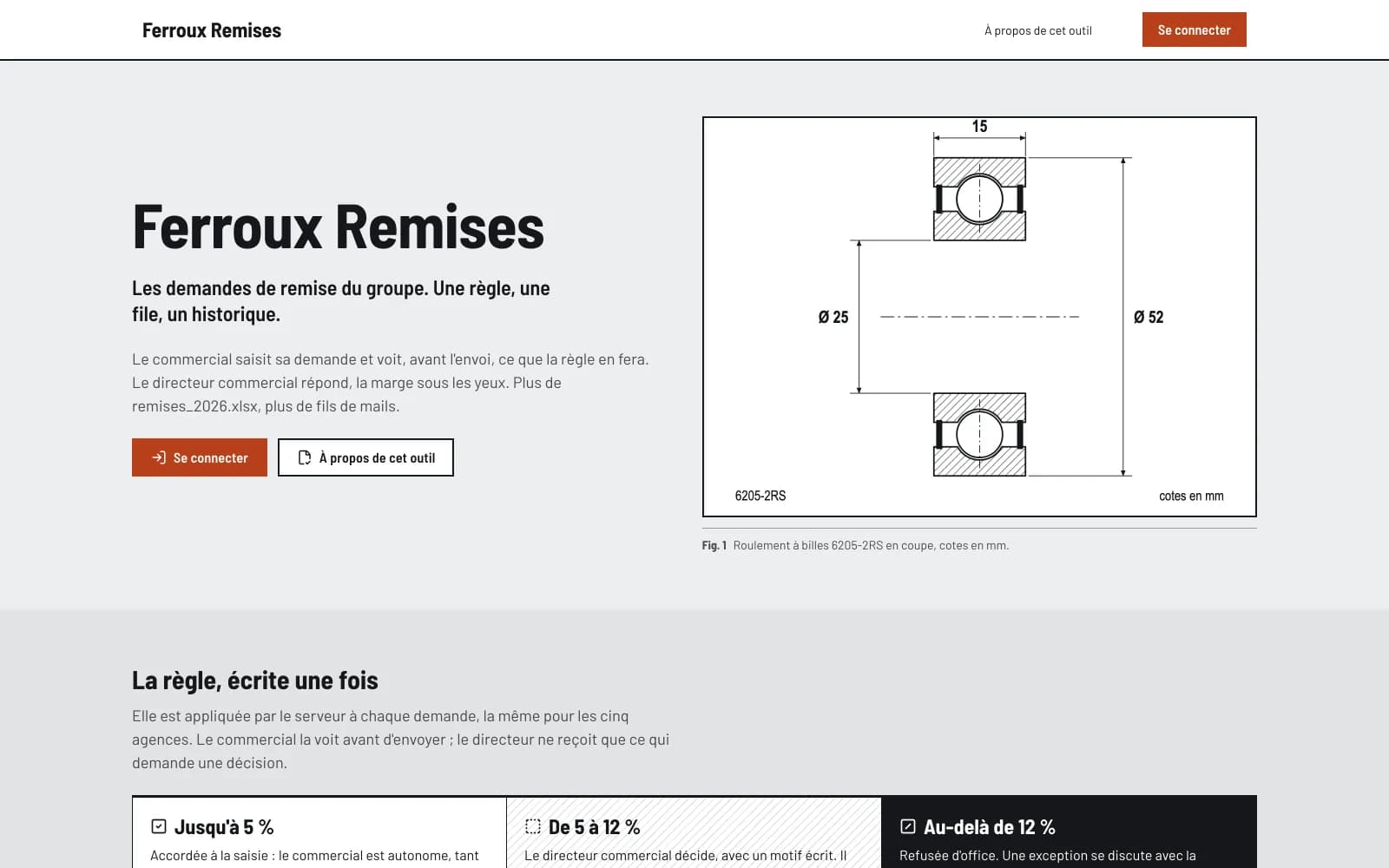
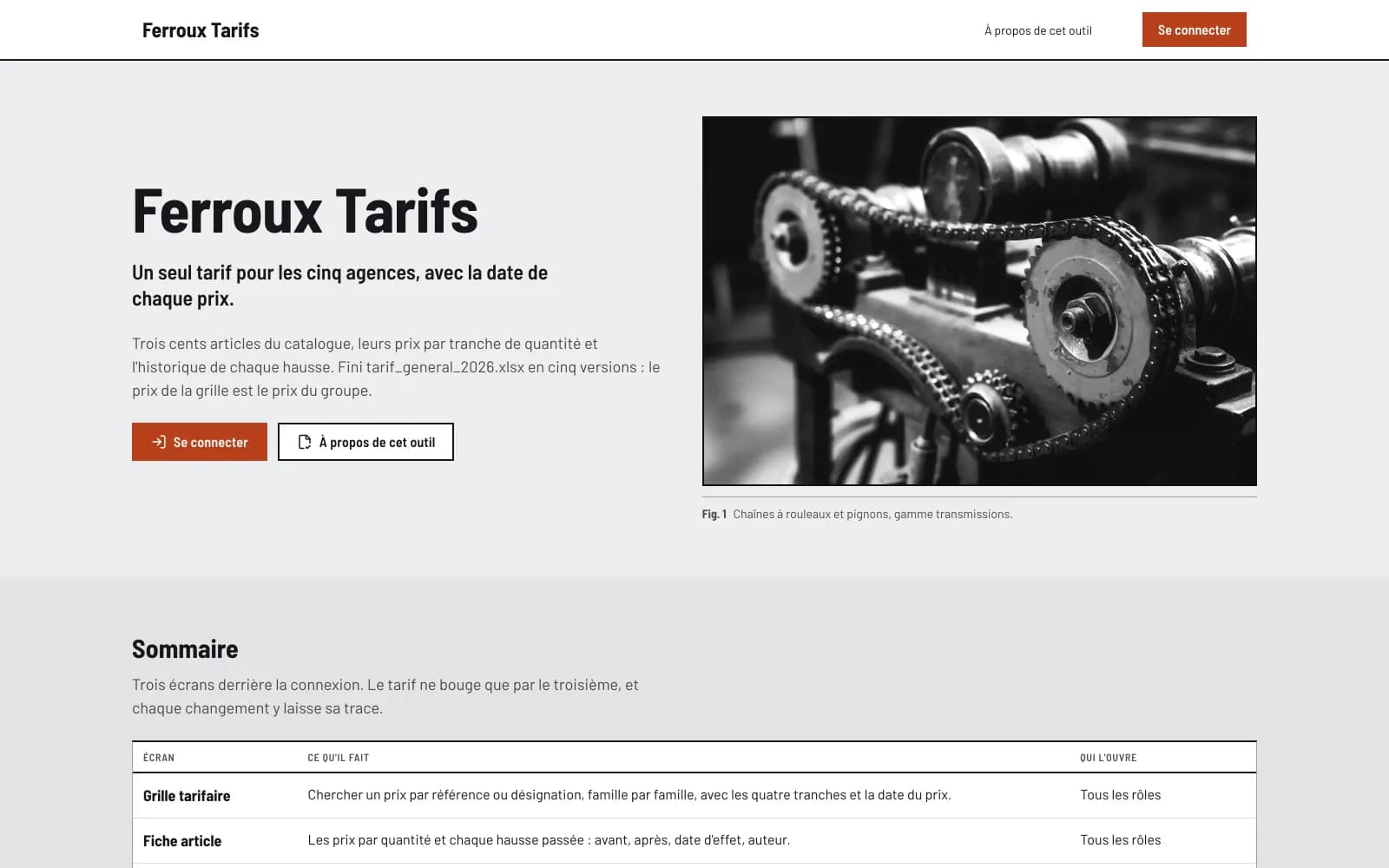
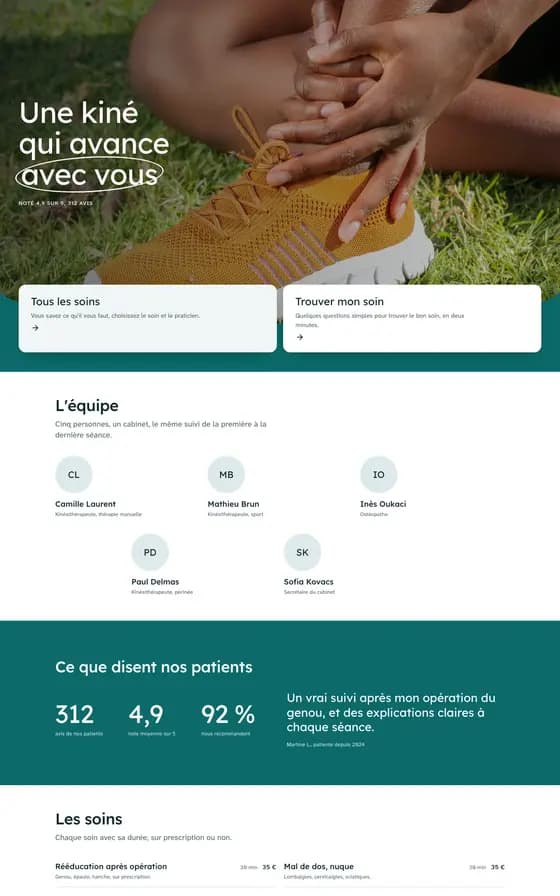
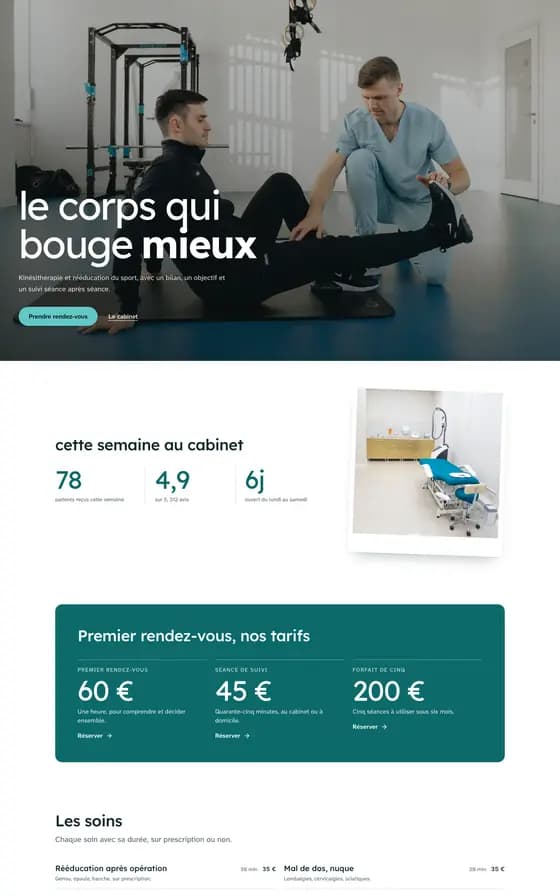
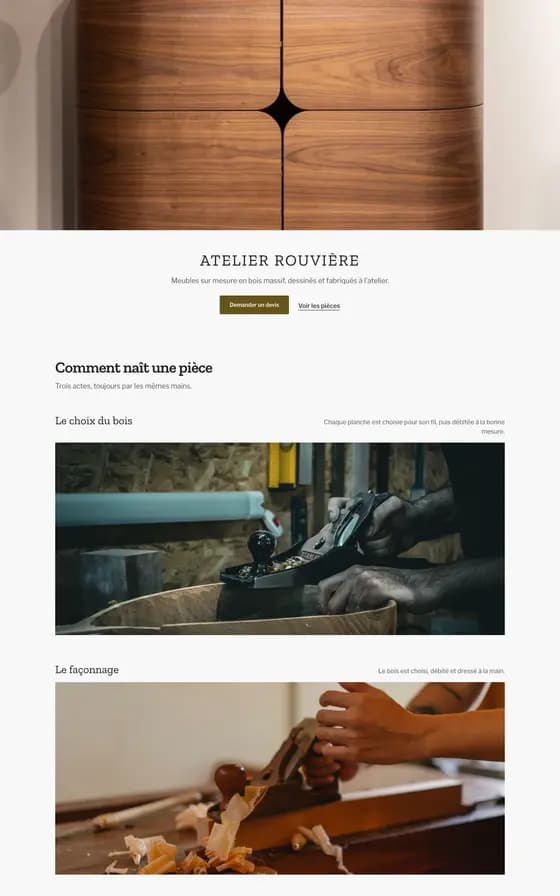
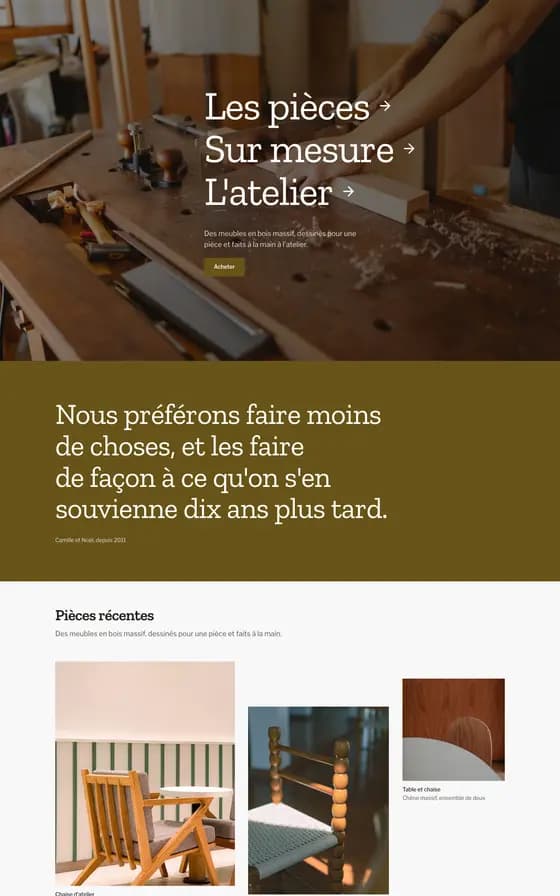
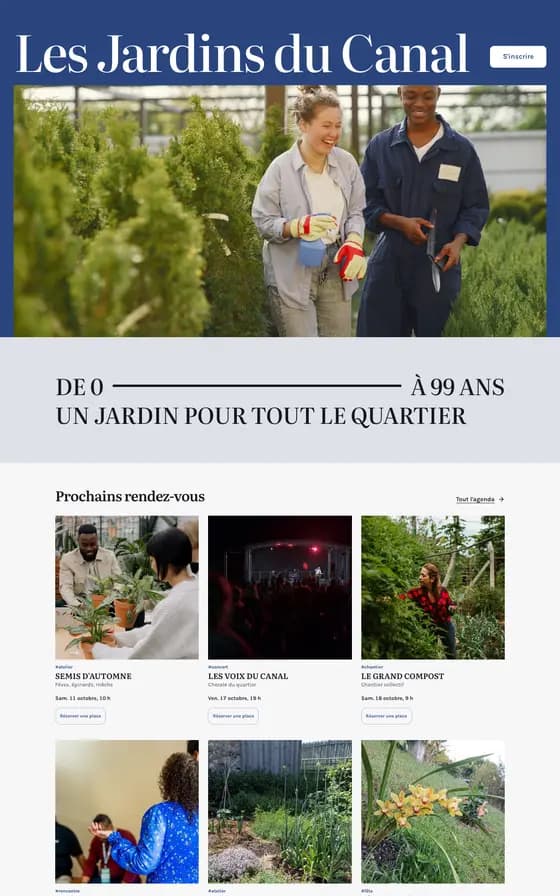
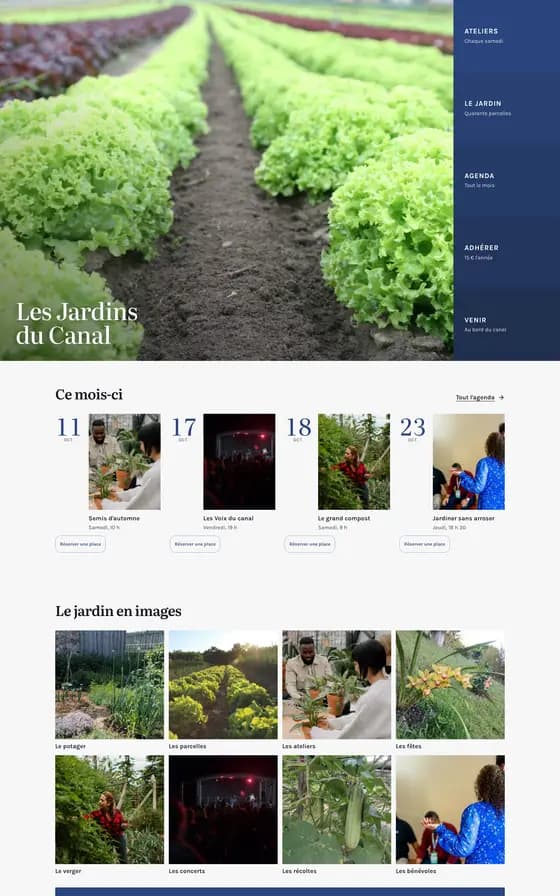
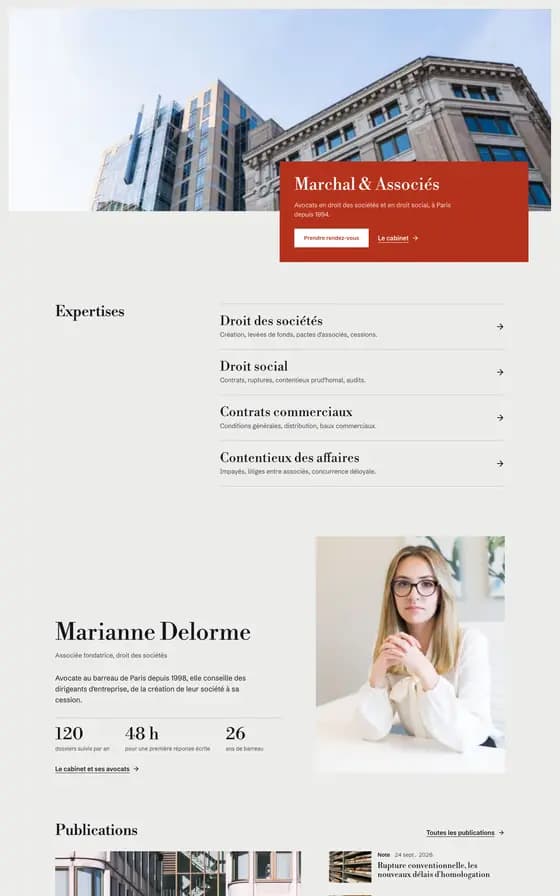
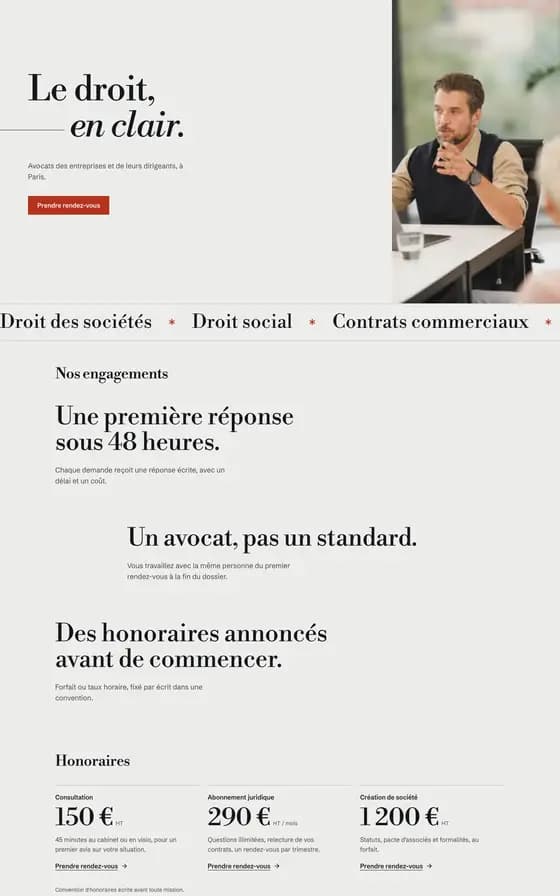
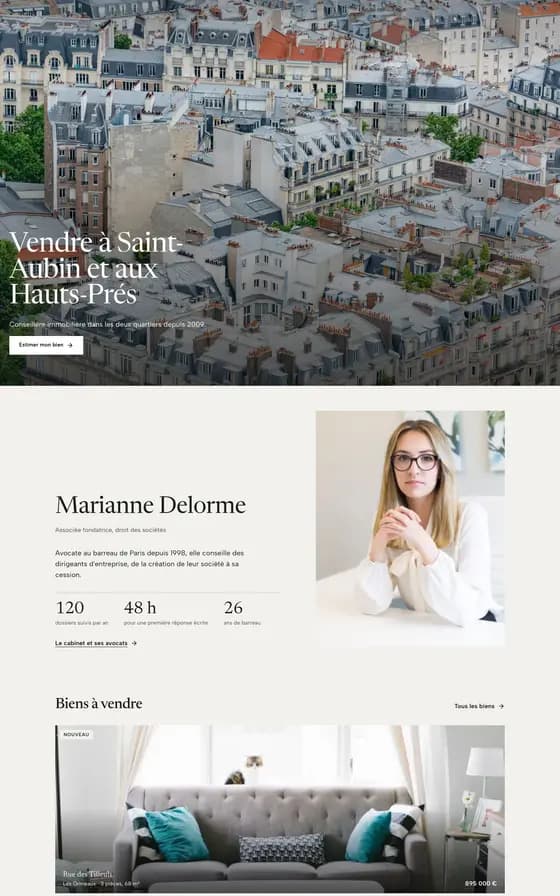
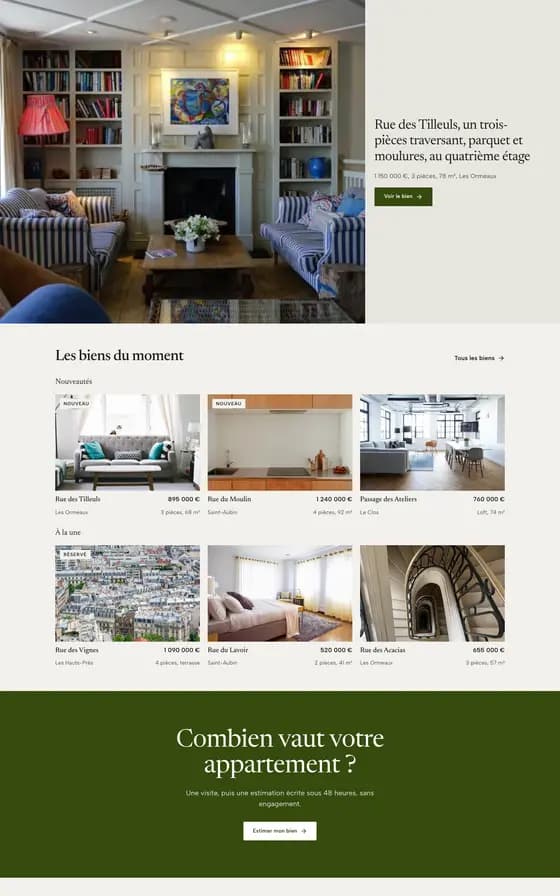
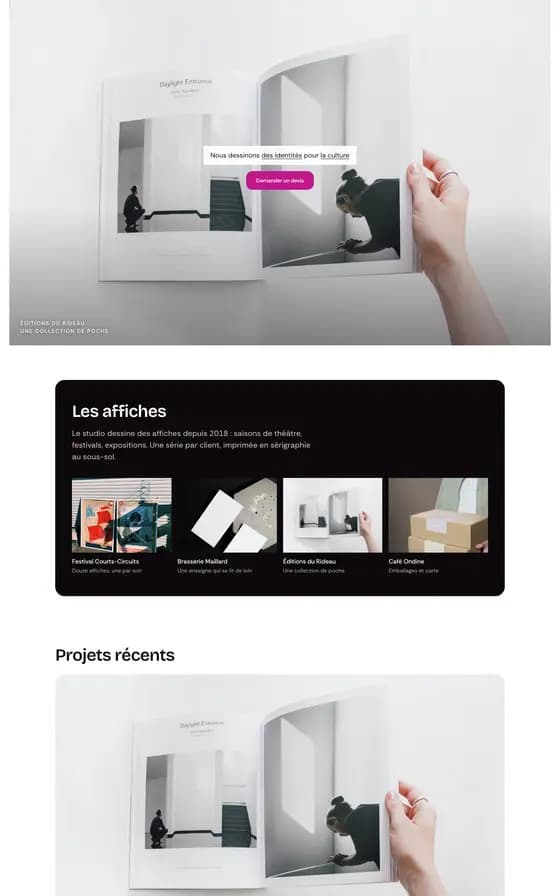
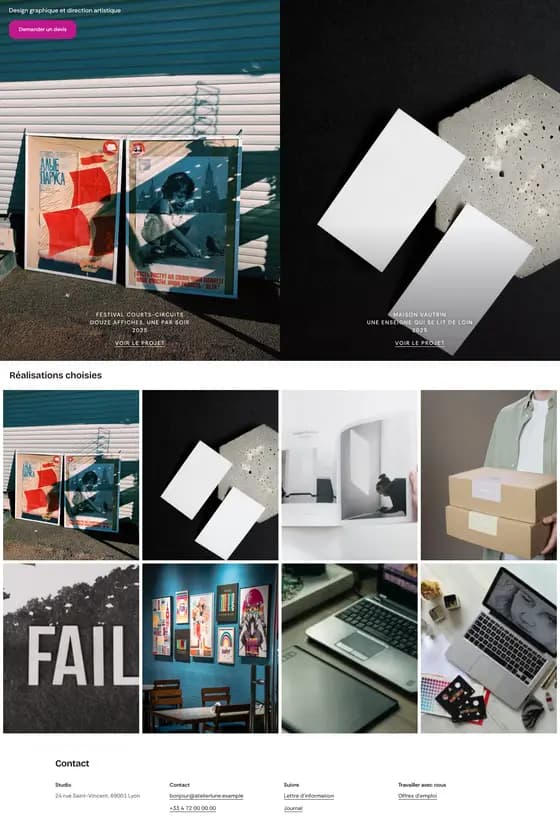
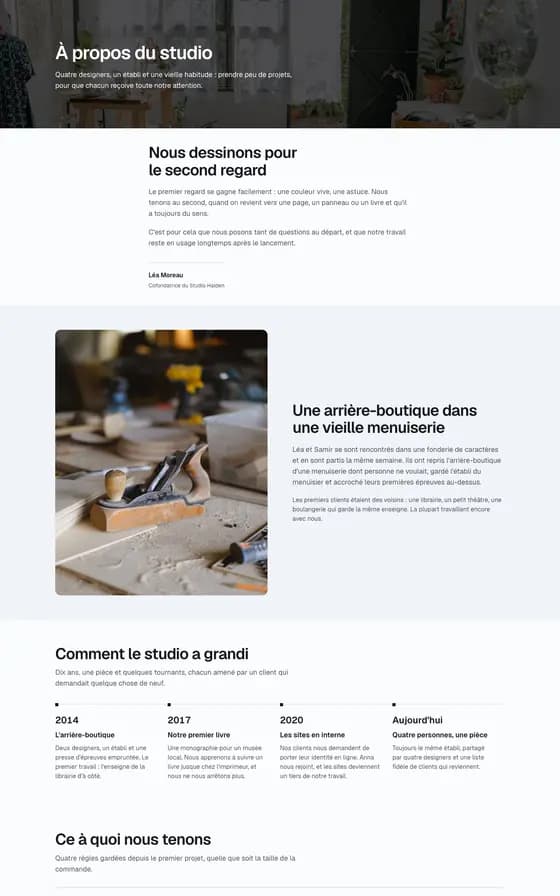
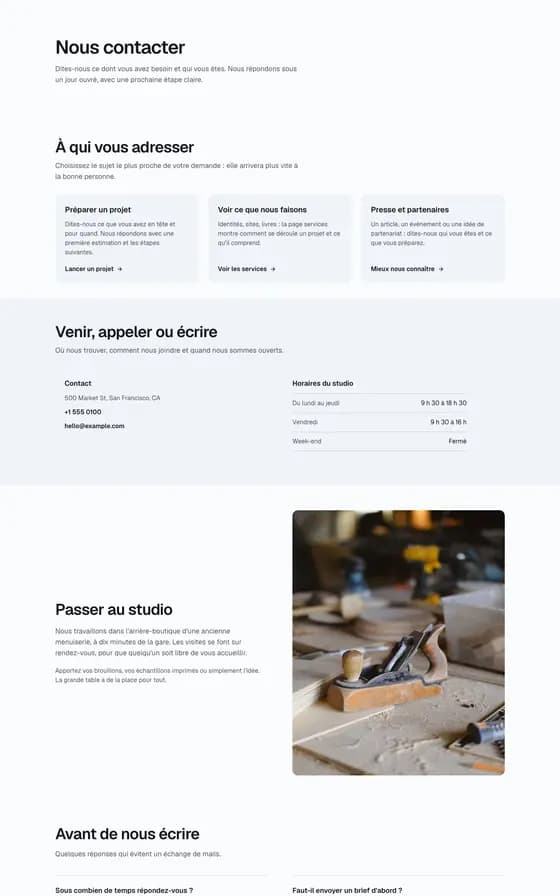
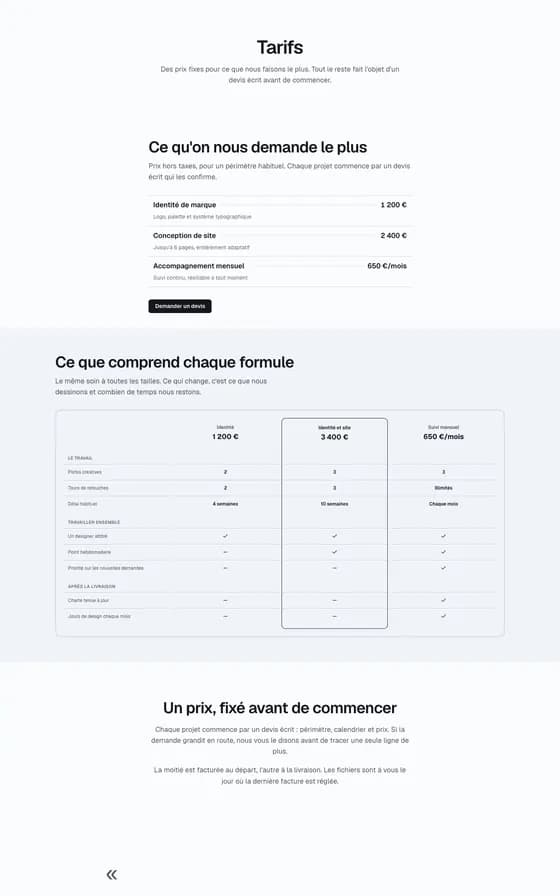
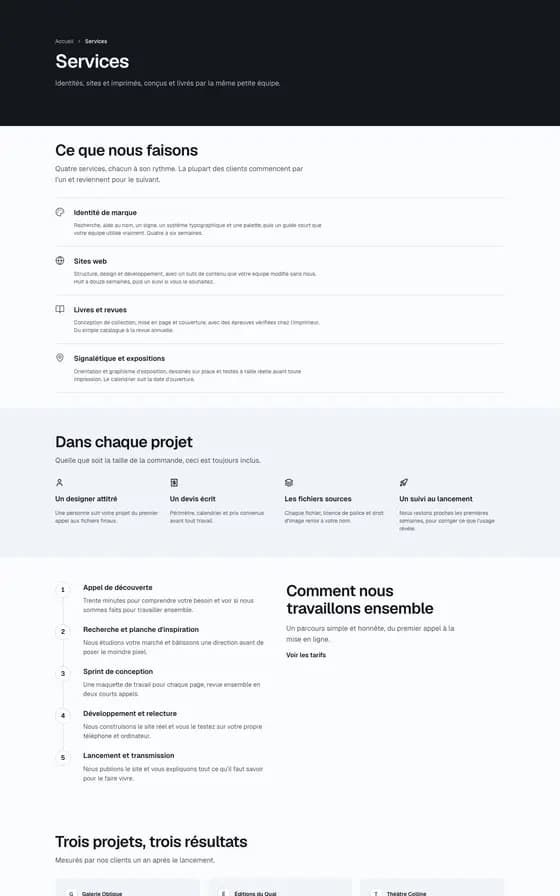
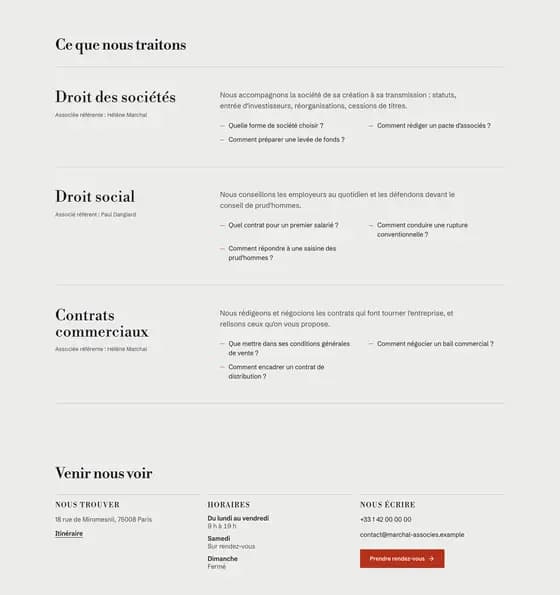
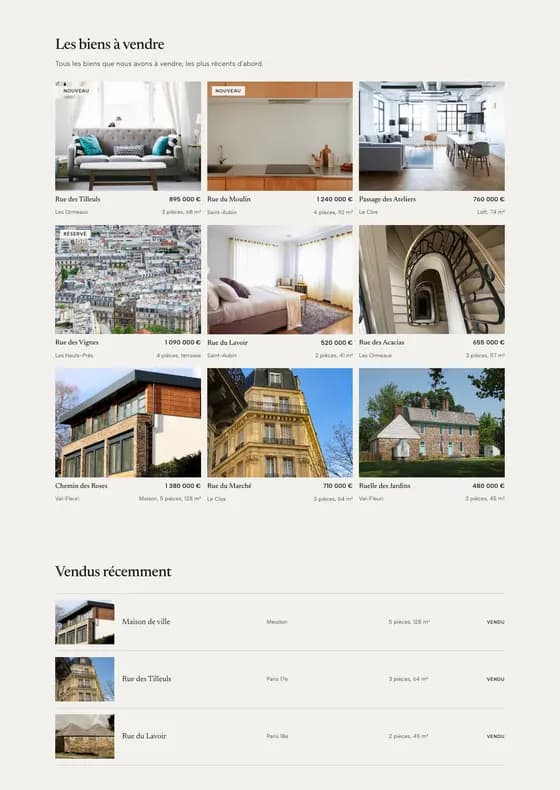
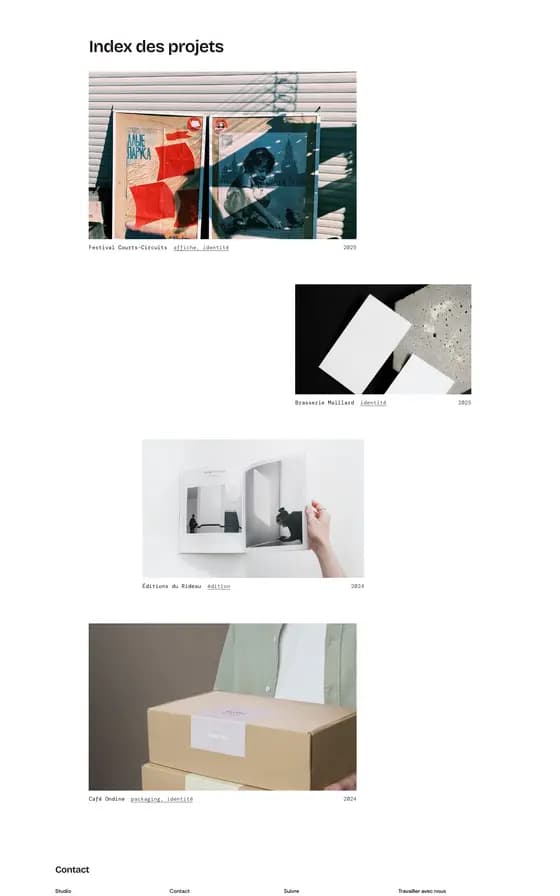
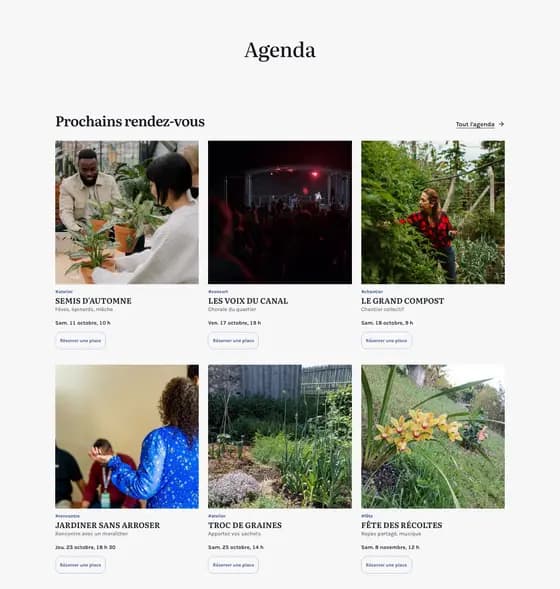
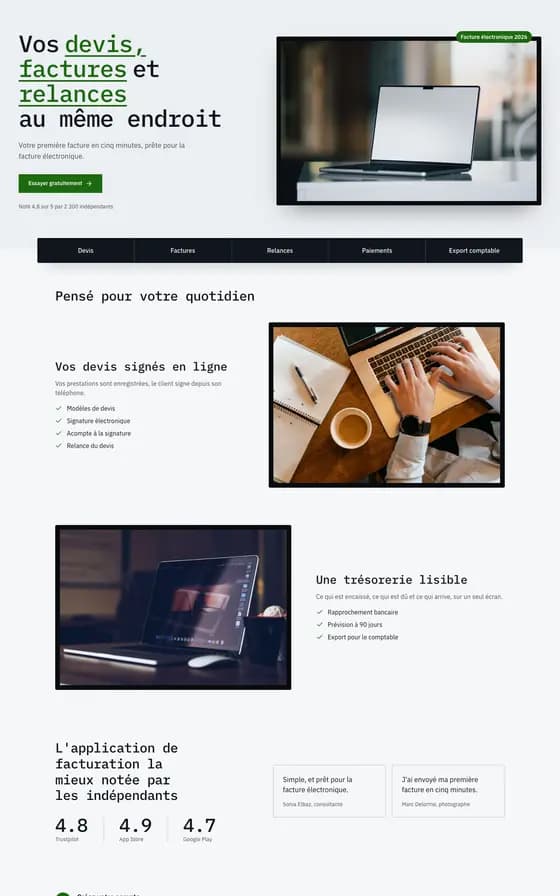
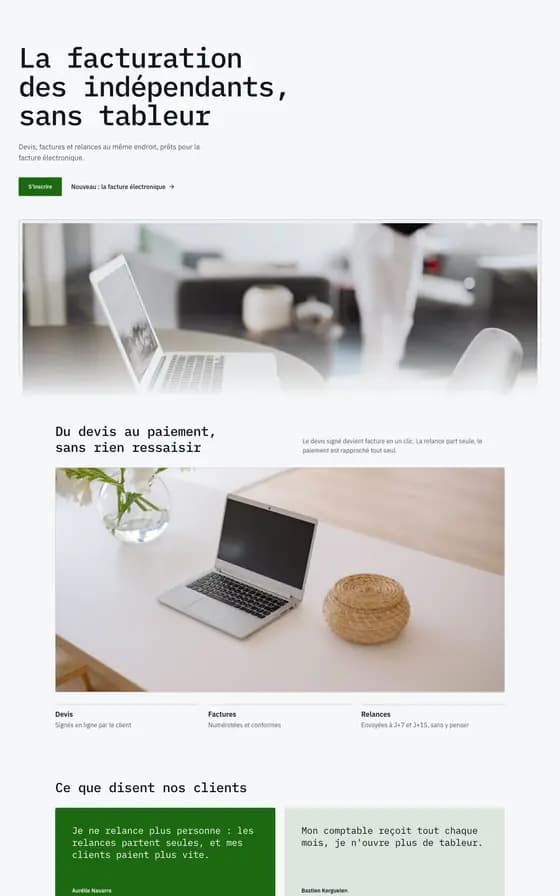
The library's 42 pages: home pages, about, contact, pricing, services, shops. Each is made of library blocks, under its own brand kit, with the words of a fictional business.
Shops and local trades
17 pages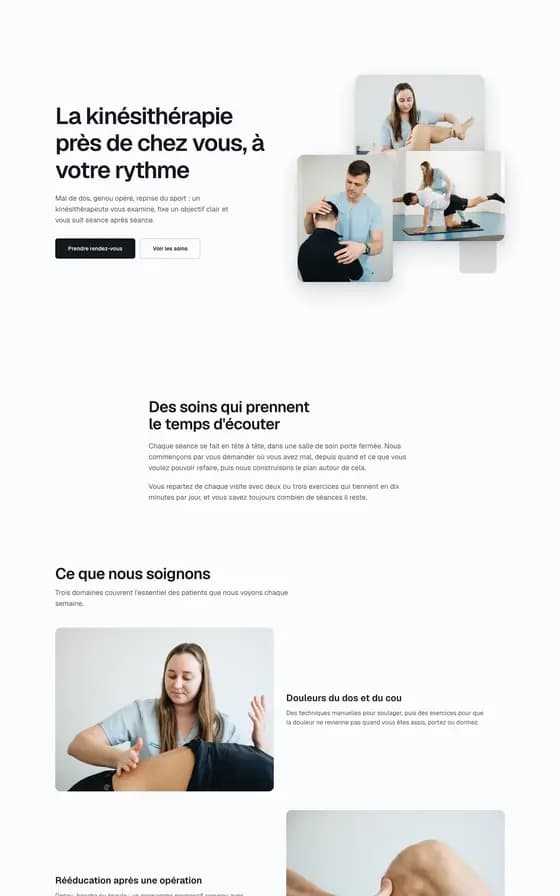
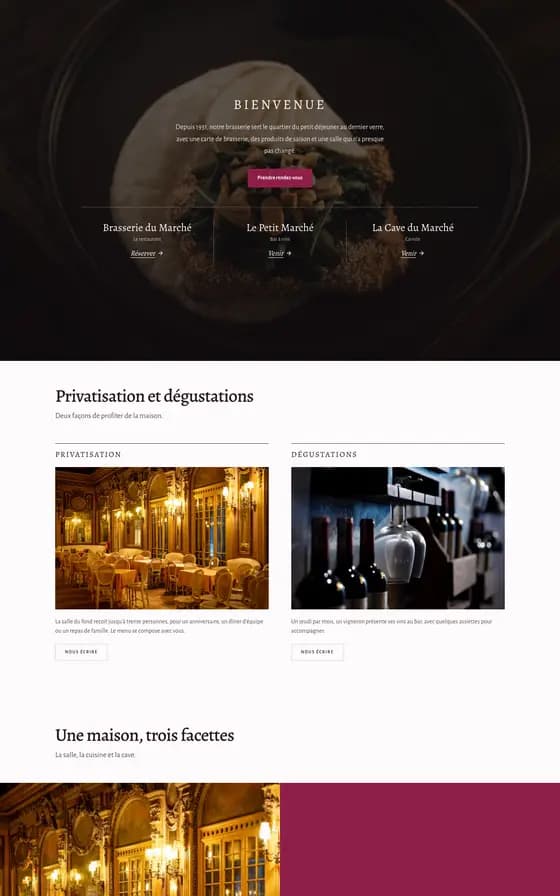
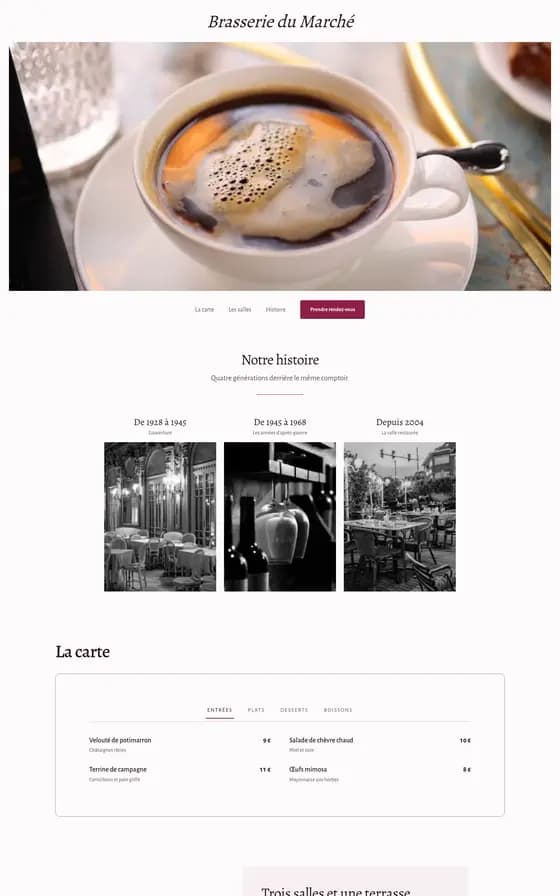
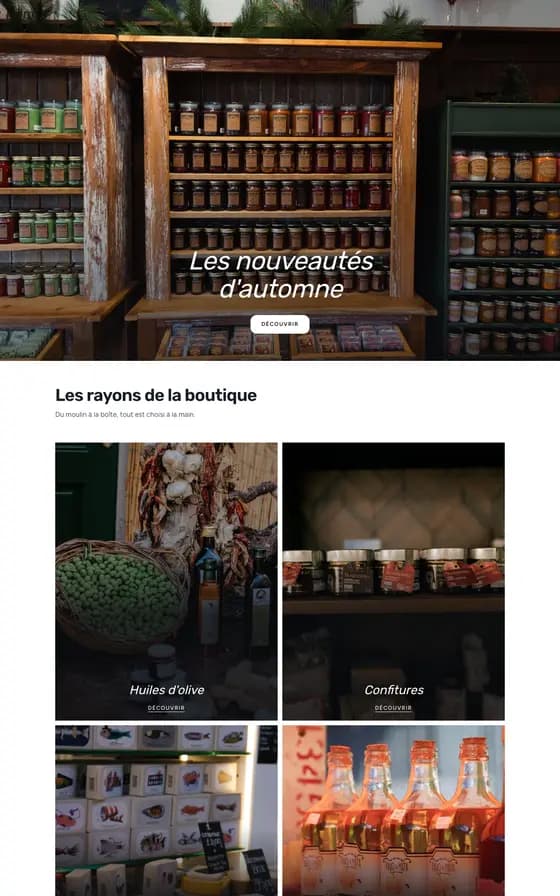
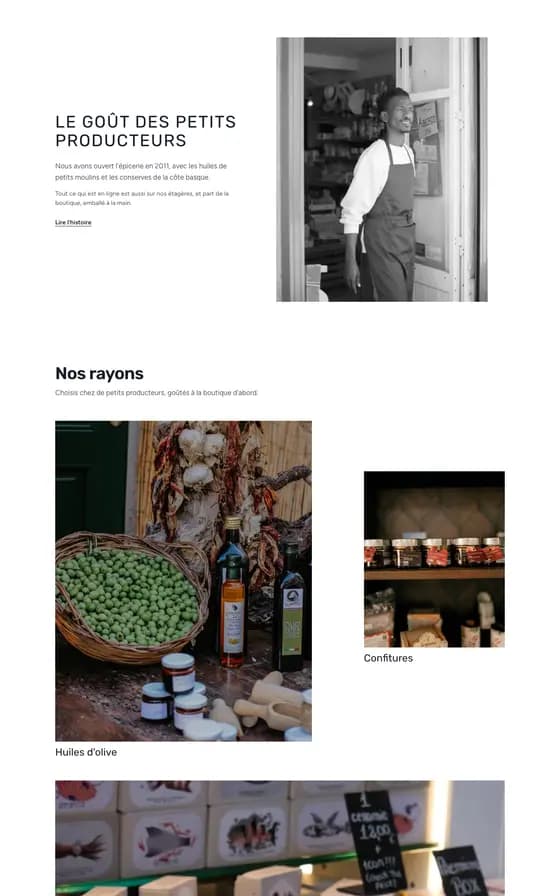
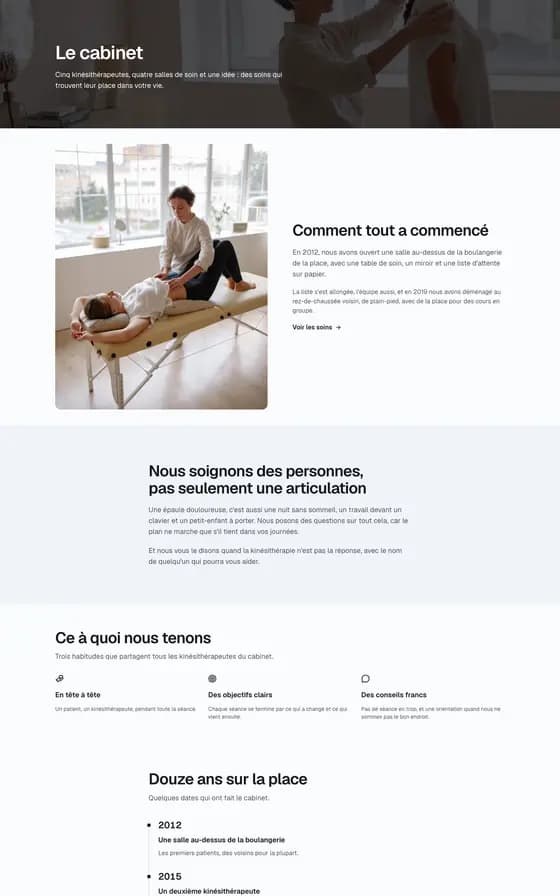
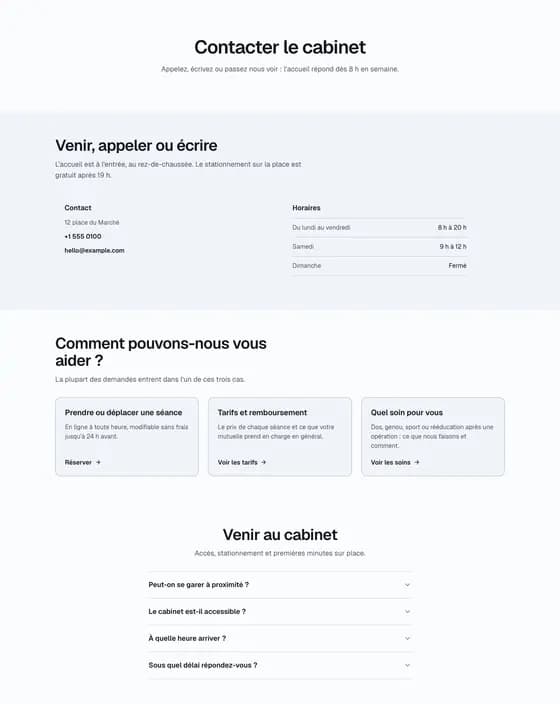
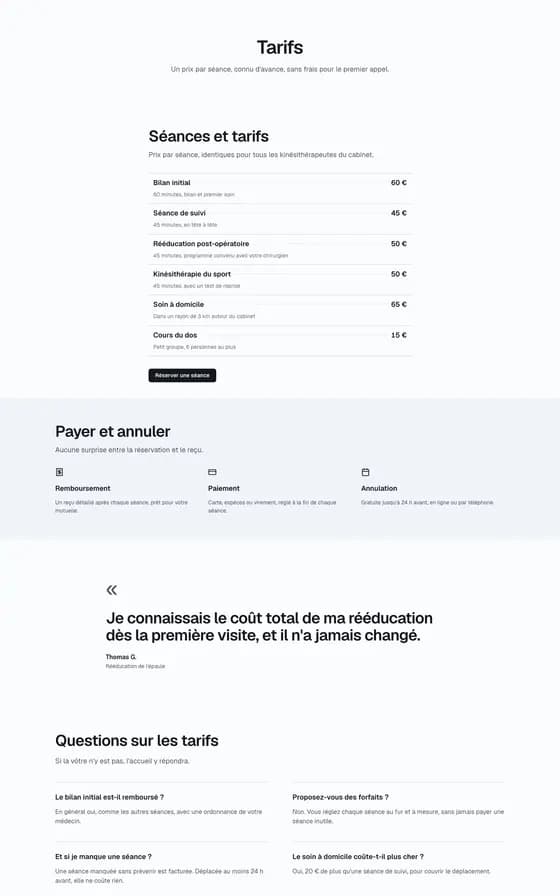
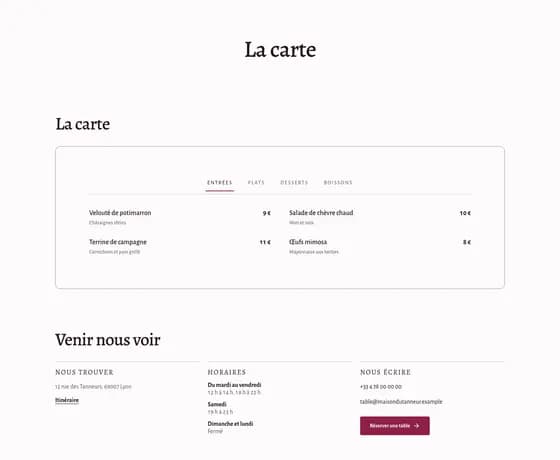
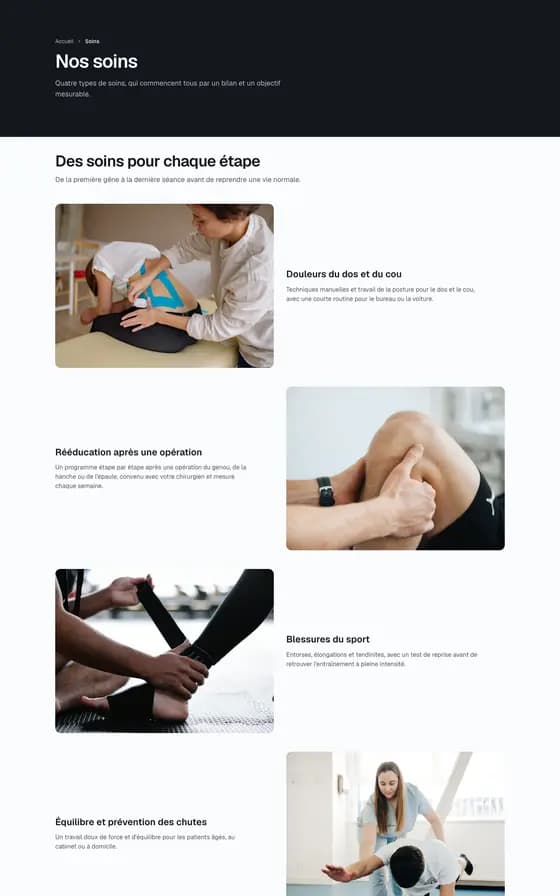
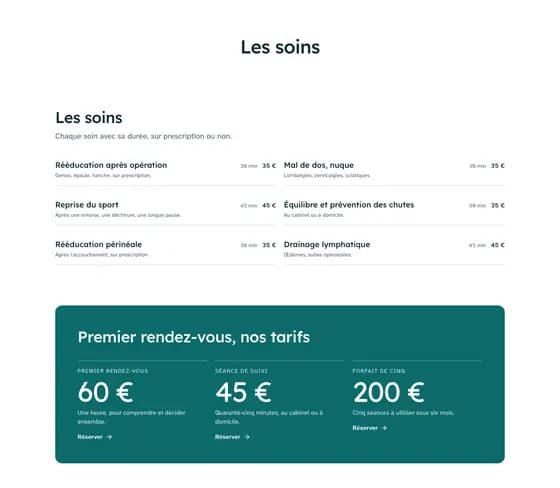
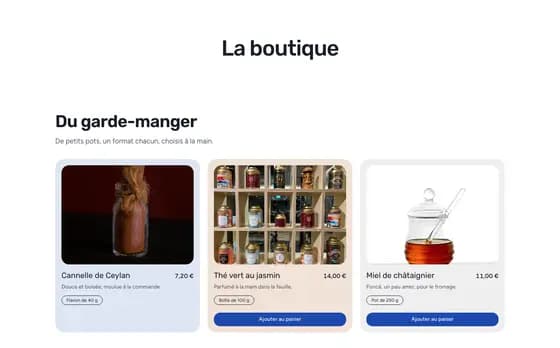
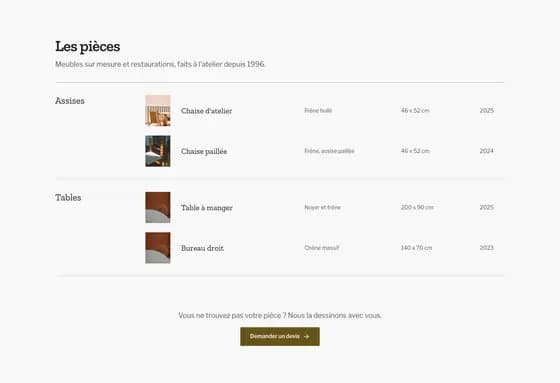
Advisory, real estate, studios and venues
17 pages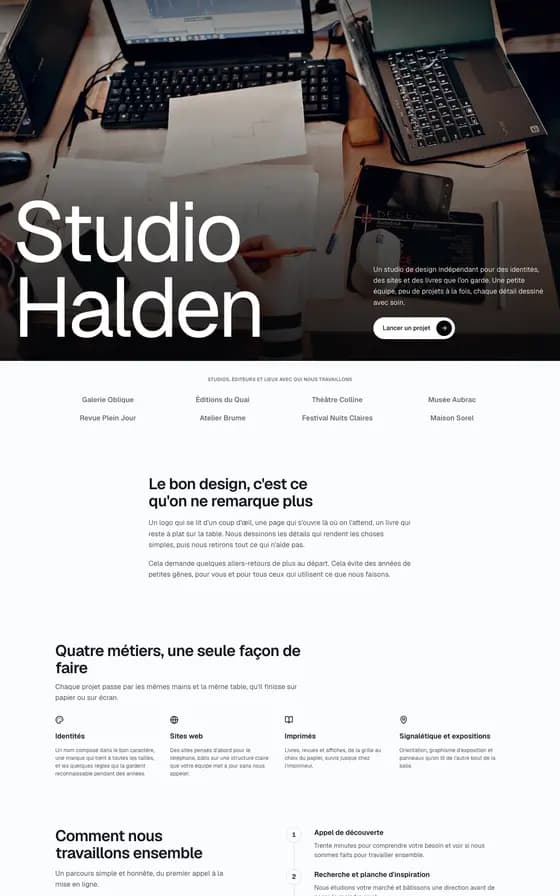
Software and products
8 pages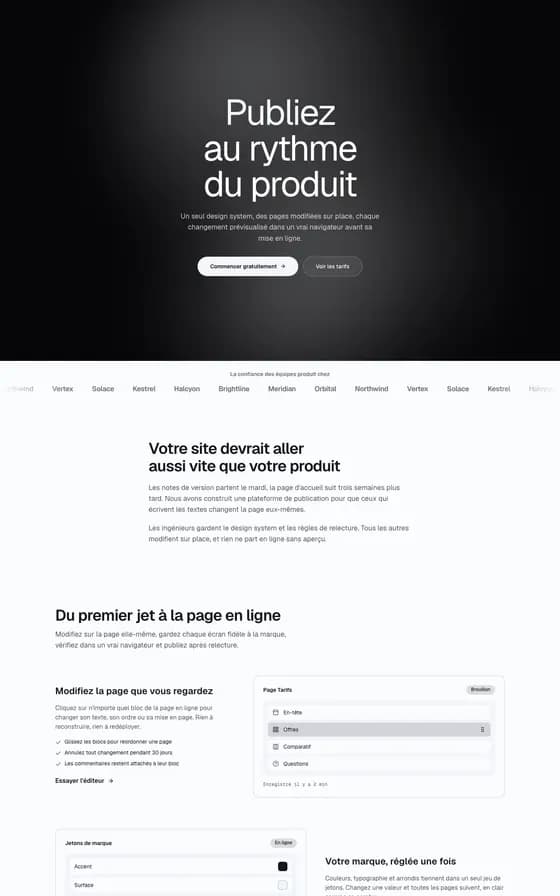
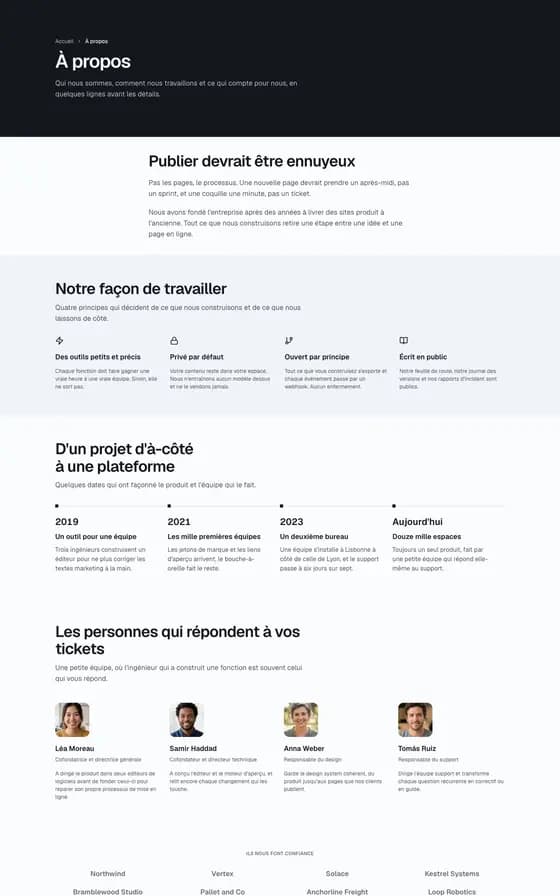
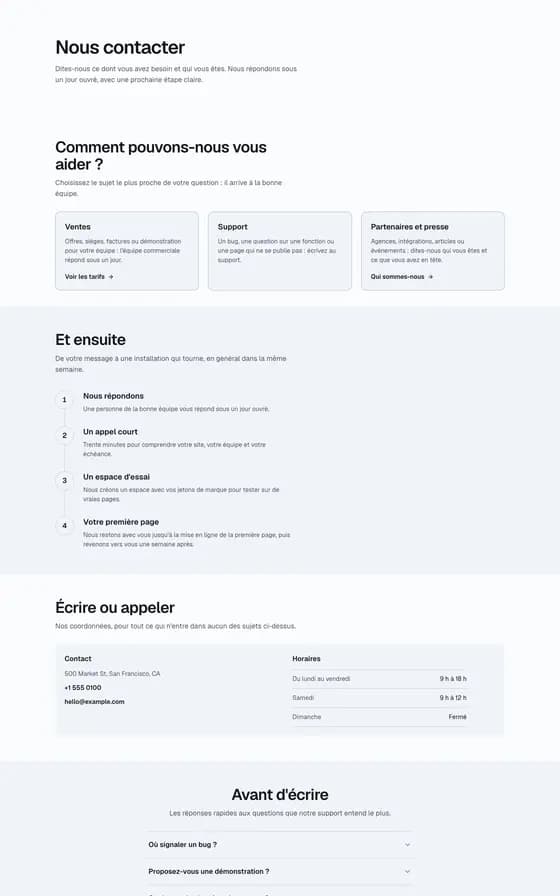
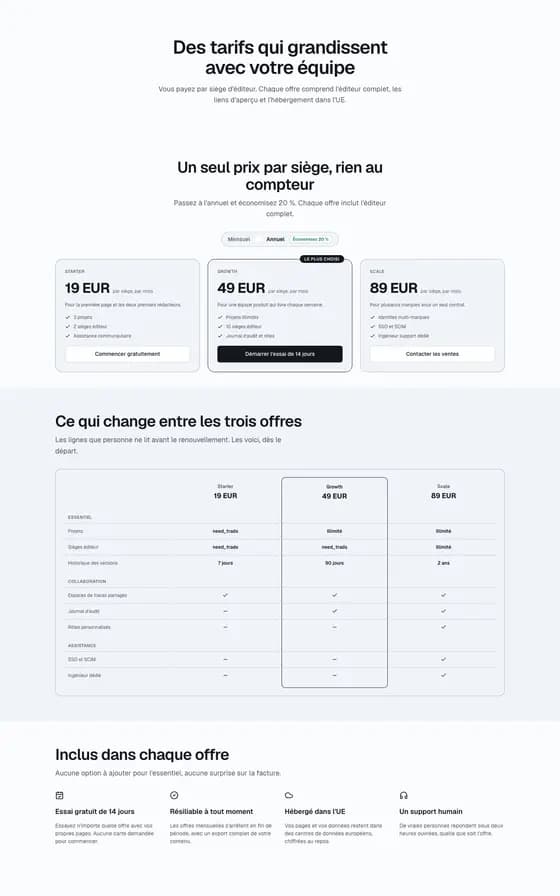
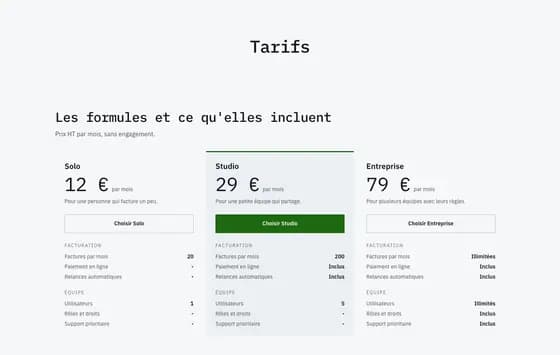
How a page is made, taken apart live.
A library page set in the sites' layout: the header, the content, the footer. Pick a layer, then click an element: the panel tells which block carries it, which classes place it and which brand kit tokens colour it.
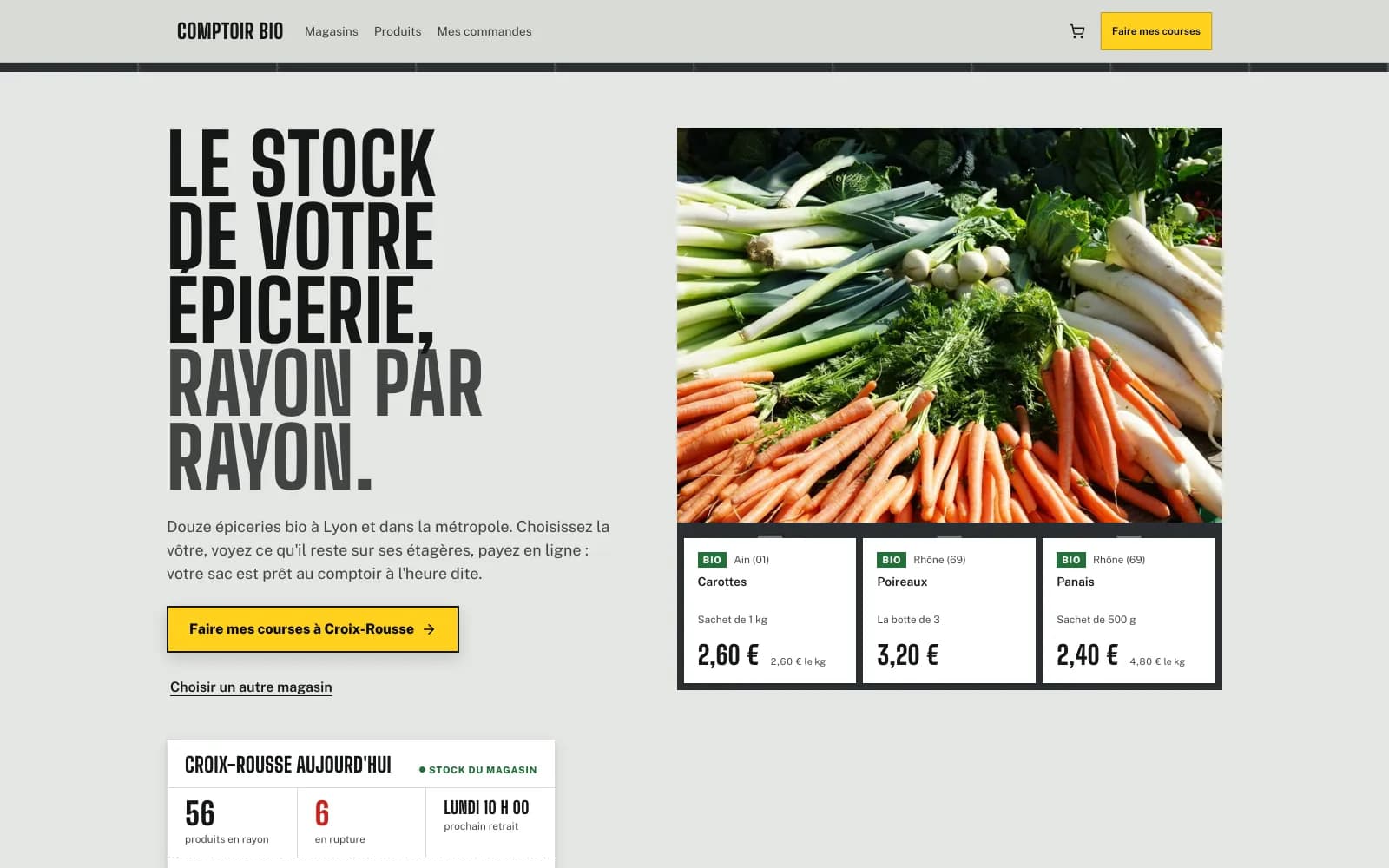
Example: the library page "Home, the shelves", for a fictional grocery. The header is the "Icon bar navbar" block, the footer the "Minimal single-row footer", filled with its own words.
Sites made with Kubbler, trade by trade.
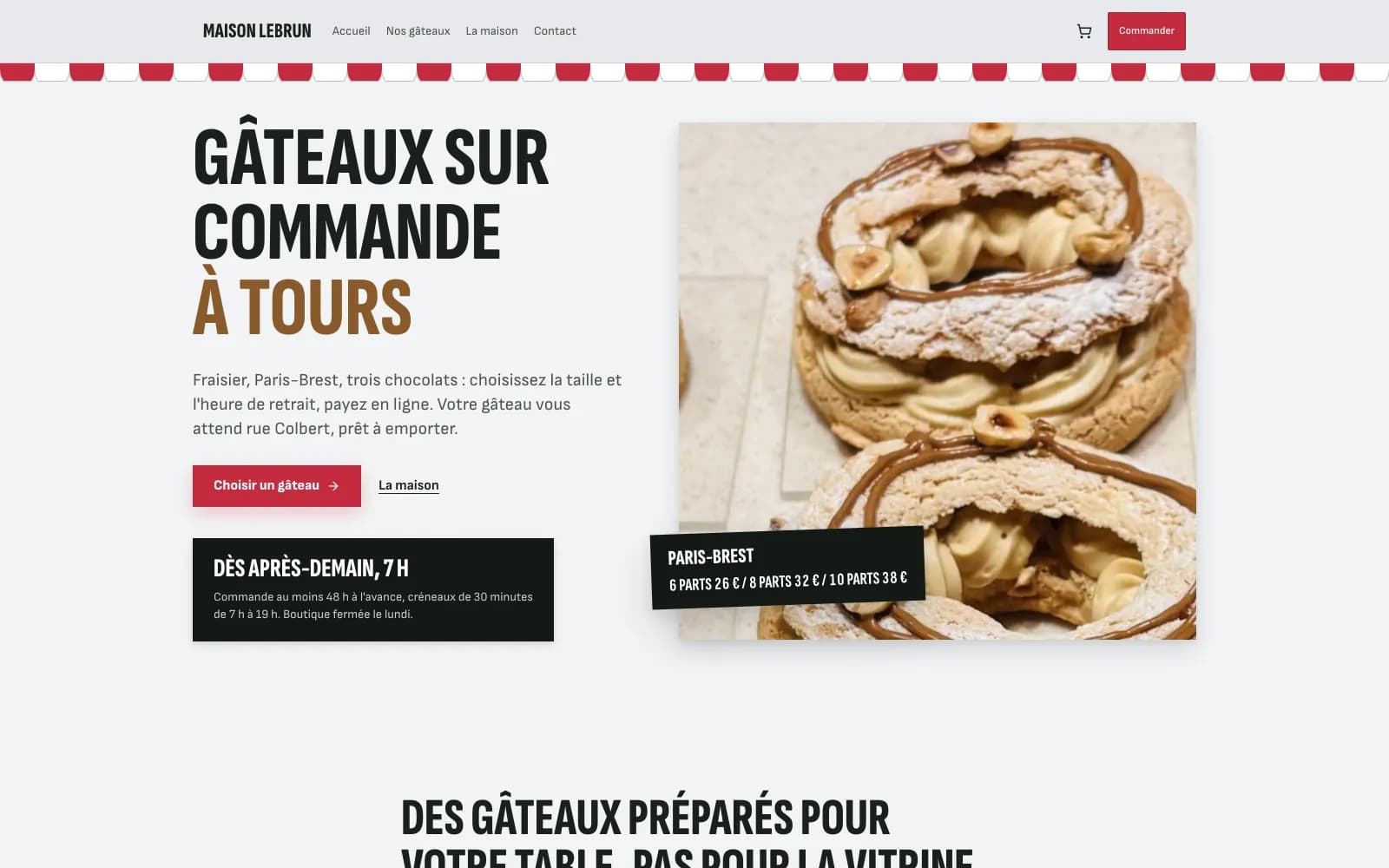
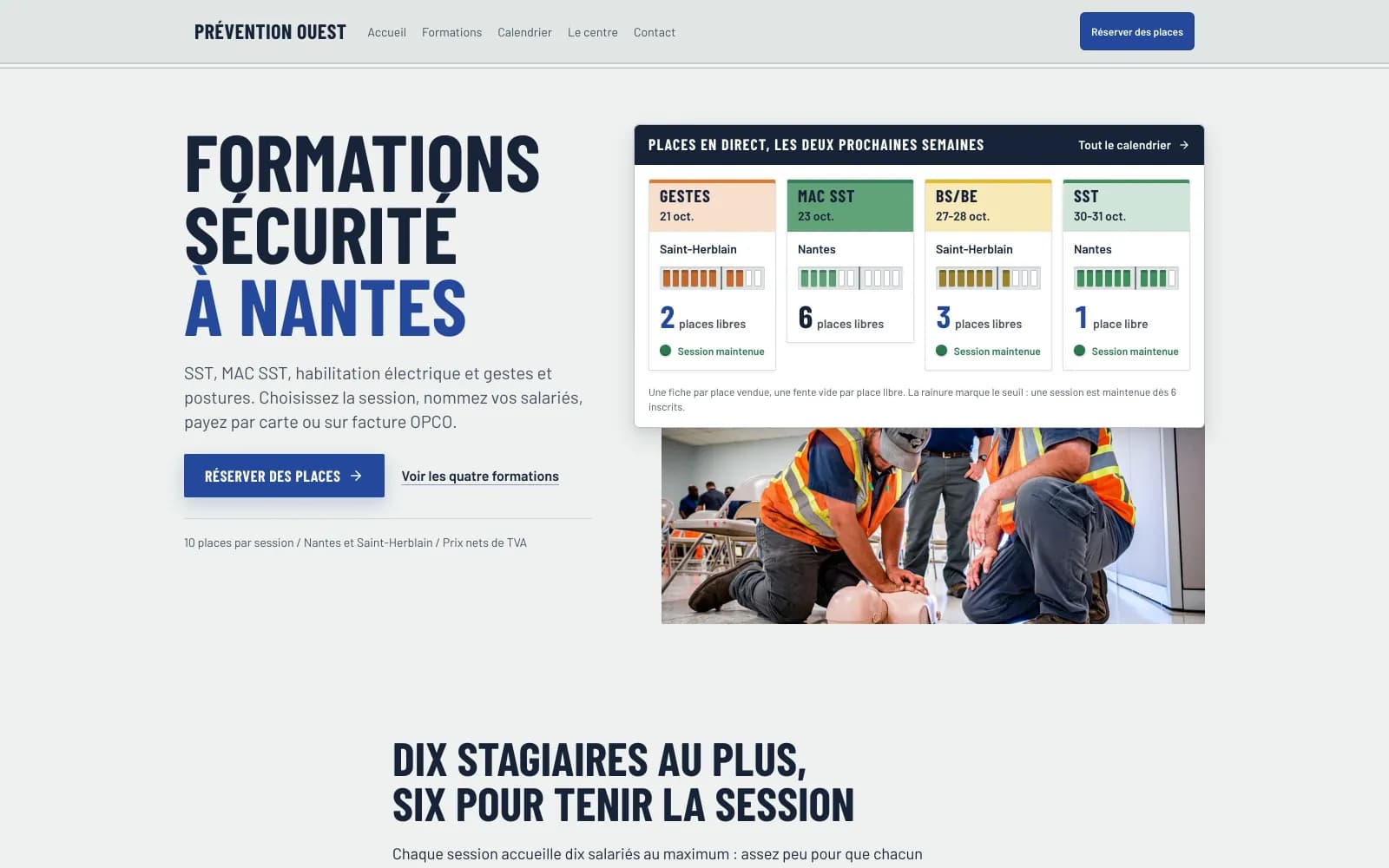
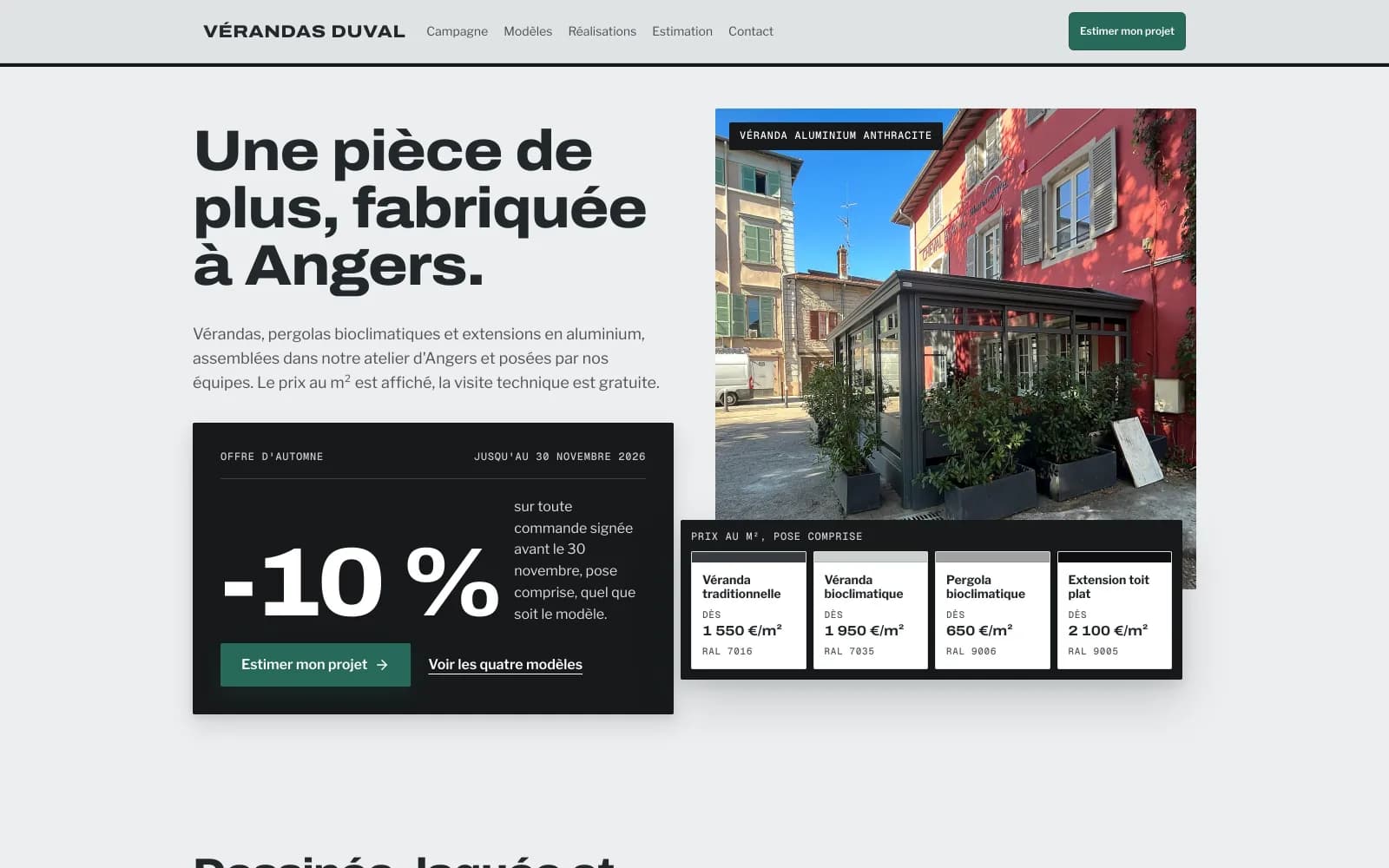
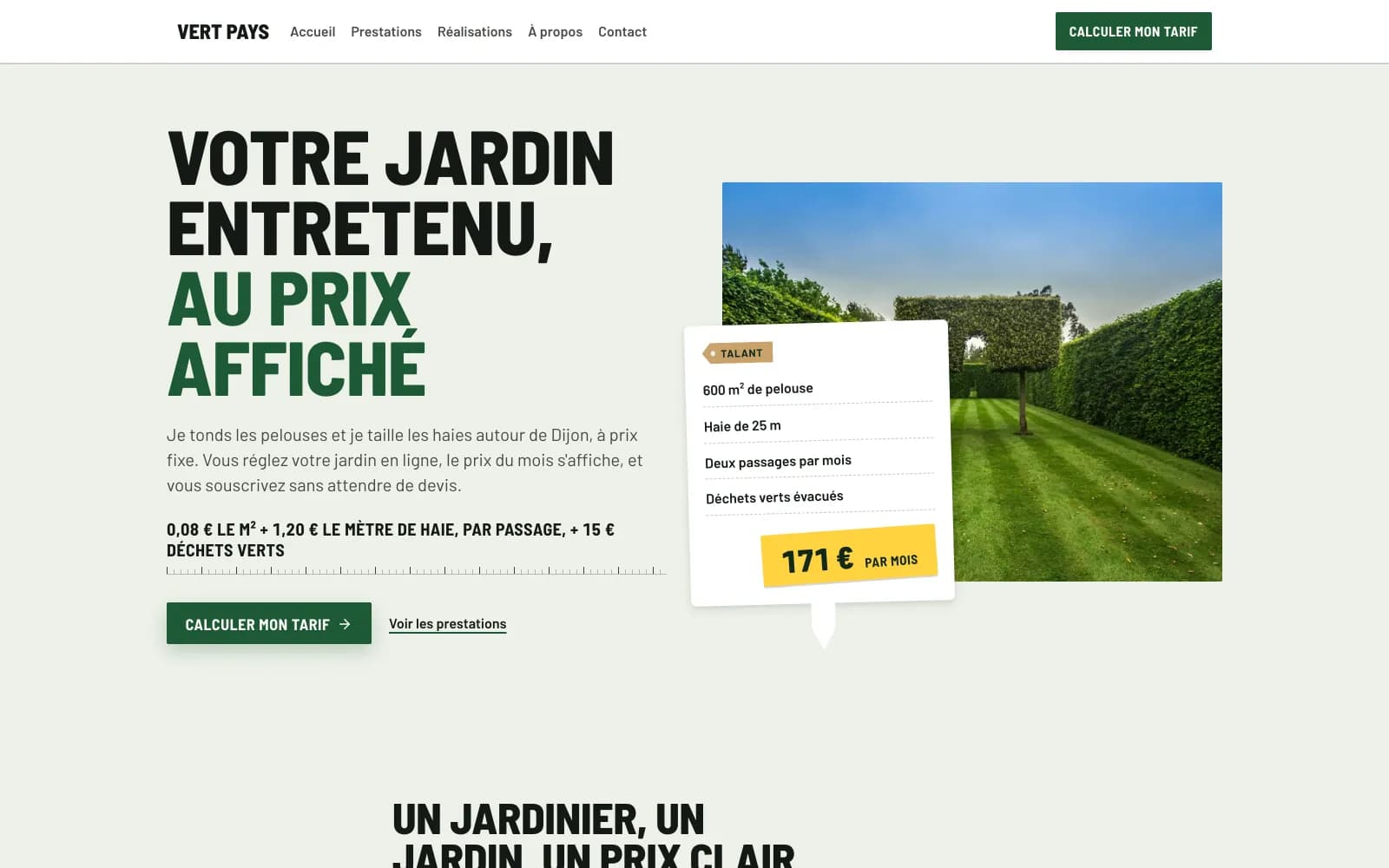
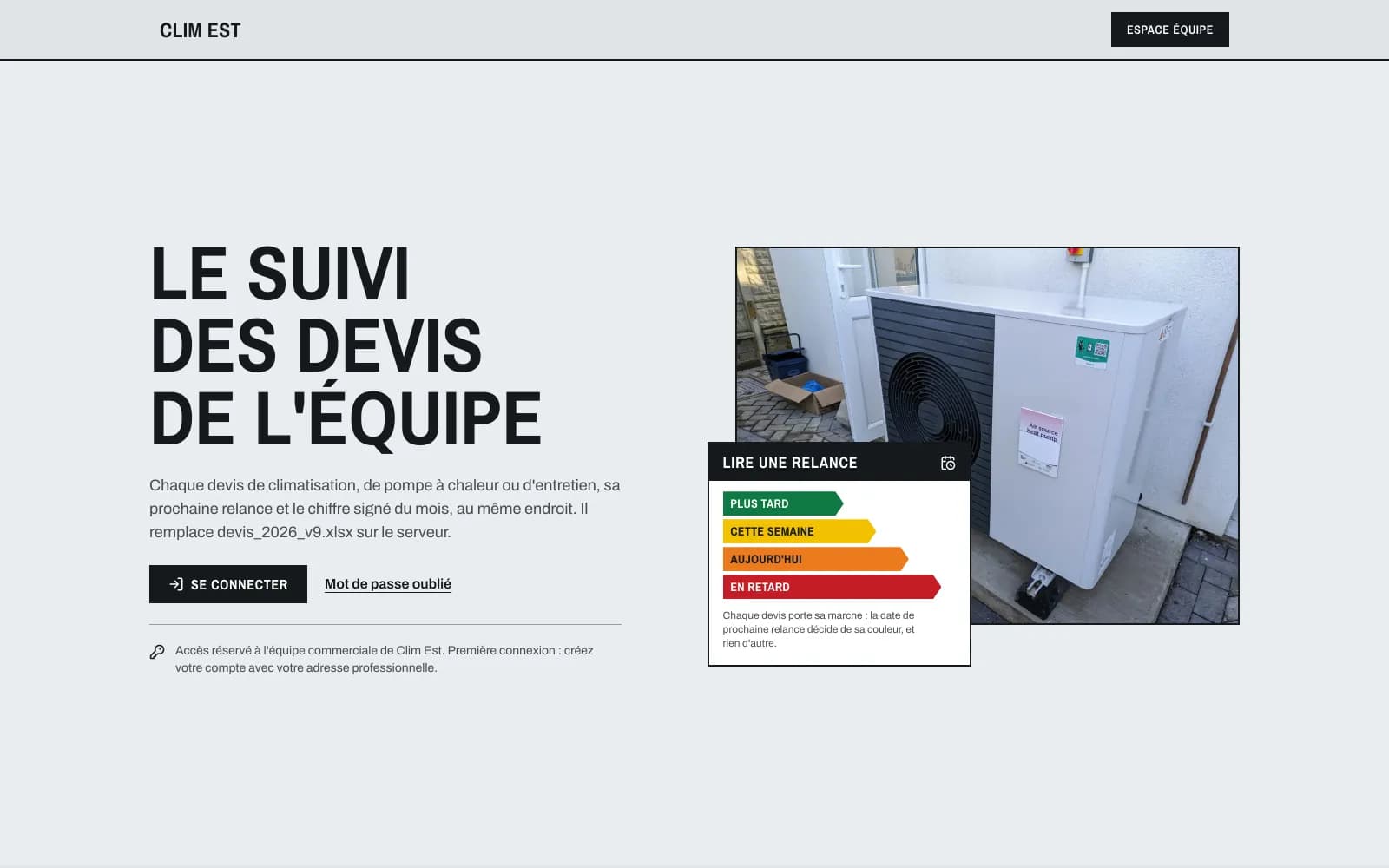
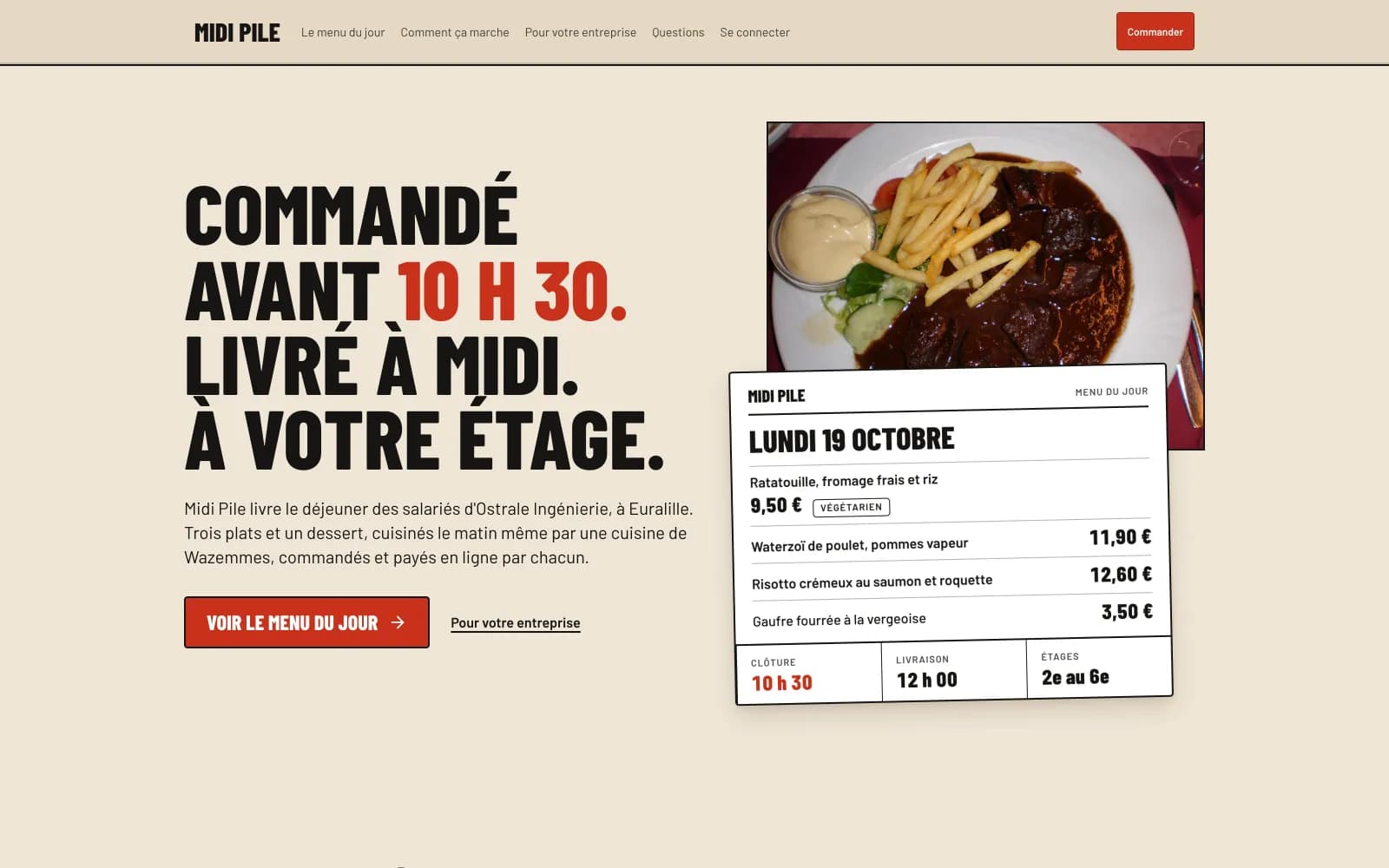
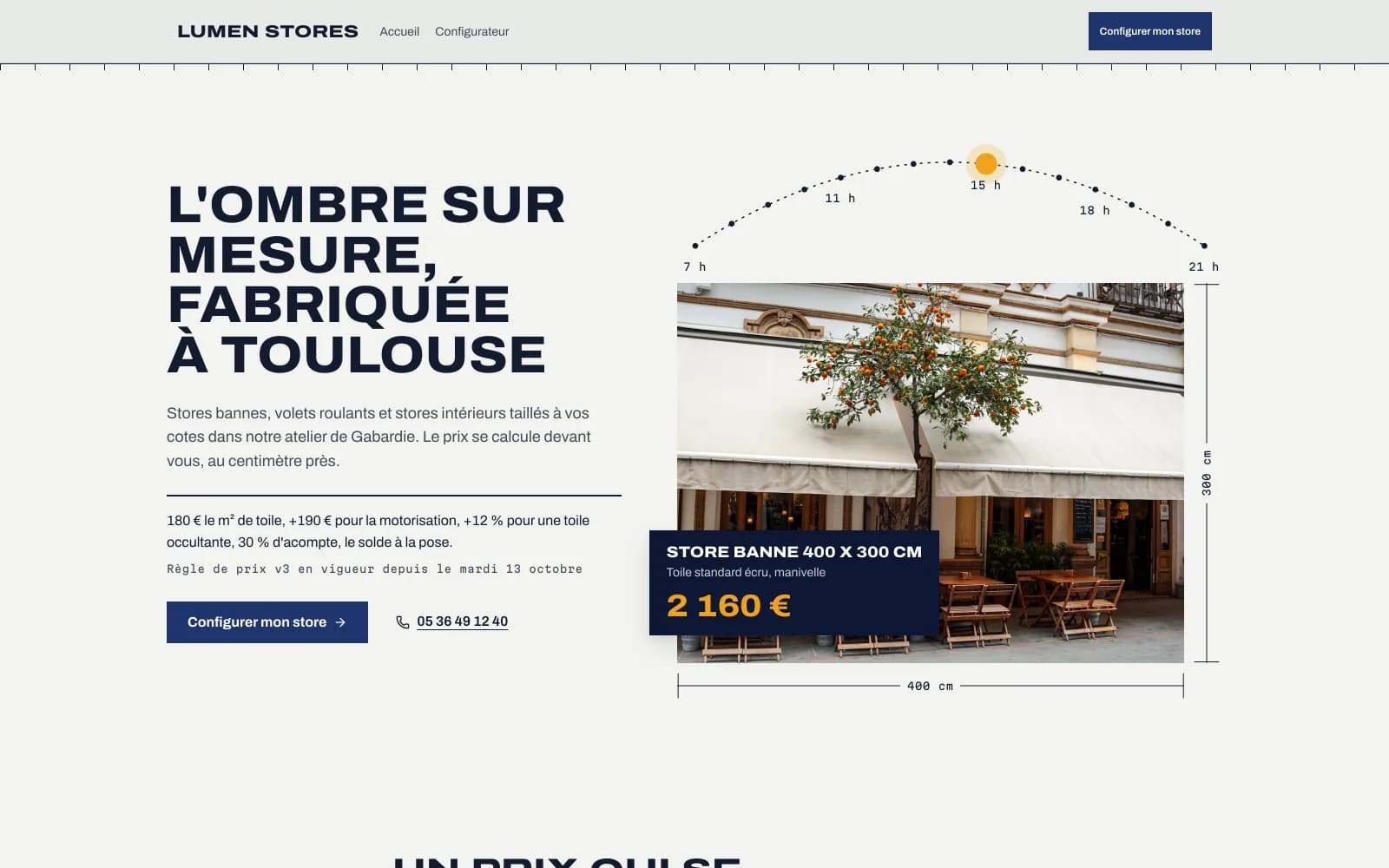
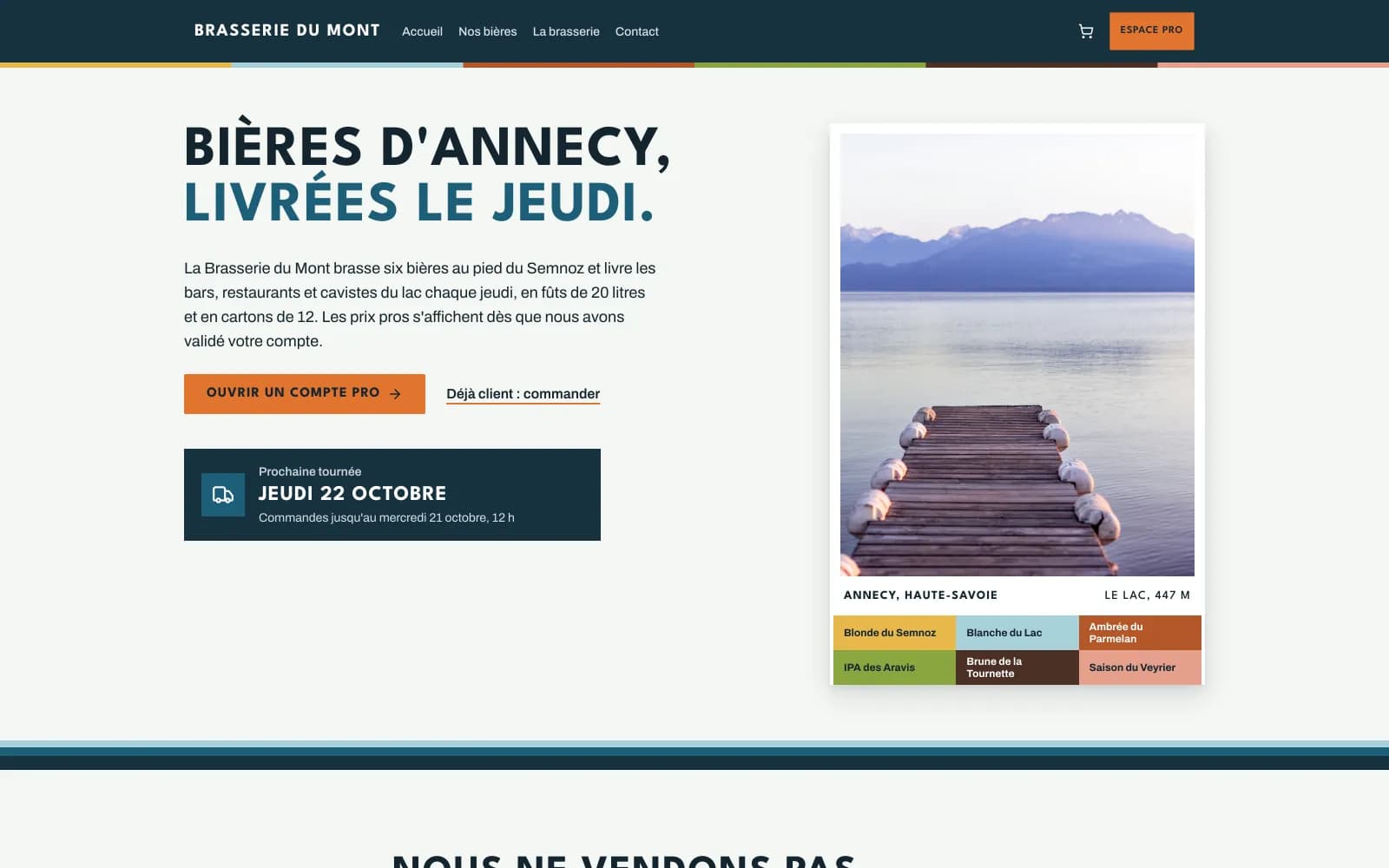
Eleven demos for fictional businesses: a bakery taking cake orders, a training centre filling its sessions, a team tracking its quotes. Each has its trade guide.